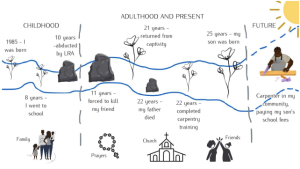

In October, we shared the River of Life, the Dance+Therapy exercise where participants draw rocks for the hardest moments in their lives and flowers for the people and places that helped them through. Nyamuch, a mother of four who fled South Sudan, looked at her river and saw something new: the hardest chapter was not the last one.
That’s true for organizations, too. So, what comes next for THRIVEGulu?
Our next chapter is our 2027–2031 strategic plan. It has one big goal, reaching 8,000 to 12,000 people directly every year across four to six districts of northern Uganda, and four big commitments to get there. Here is the thinking behind each one.
1. Expand mental health services. Mental health care is hard to find in northern Uganda. When we brought Dance+Therapy to Palabek Refugee Settlement in 2024, our assessment found just one health center with a psychiatric nurse in the whole settlement. Since then, 226 refugees, including 46 people with disabilities, have completed our 12-week program. Every one of them started with moderate or severe symptoms of depression; by the end, just 7% did. Signs of PTSD dropped from 84% to 2%, and the share of community members who could reach mental health care doubled, from 34% to 68%. Nearly all participants, 95% or more, said they were pleased with the program. We’re so grateful to Grand Challenges Canada for funding this work. That grant ended in April, and we’re ready to bring Dance+Therapy groups to the THRIVEGulu Center in Gulu, home of the Mama Judy Dushku Healing & Reflection Center. We just need the funding to do it. Demand keeps growing: so far this year, our counselors have reached more than 7,000 people with individual, family, and group counseling and mental health education. More counselors, more Dance+Therapy groups, and more trained community leaders means fewer people struggling in silence.
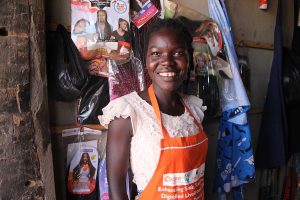
2. Strengthen livelihoods. Trauma and poverty feed each other. It is hard to heal when you can’t feed your children, and hard to earn when you’re carrying invisible wounds. That’s why savings groups and financial literacy sit right beside counseling in our work. We just finished the third year of Project Redwood with young people from refugee and host communities in Palabek, most of them women. Project Redwood has already funded a fourth year, and this year’s results show why:
- 95% now own a business
- 92% save part of their monthly income (up from 32%)
- 89% can meet their household’s basic needs (up from 24%)
The curriculum is reaching beyond Redwood, too. In a separate program funded by the Feminist Humanitarian Network through CEPAD, the share of savings-group members saving part of their income rose from 33% to 85%, and more of them now earn their main income from farming or a small business (38% to 69%). We’re beginning financial literacy cycles at the THRIVEGulu Center in Gulu, and organizations like World Vision and ZOA have asked us to train their groups.
3. Grow education and life skills. Healing and earning both get easier when you can read your savings book, help with homework, and believe in your own ideas. That’s why literacy and life skills are their own commitment in the new plan. The Women’s Library & Community Resource Center is the hub, with adult literacy classes, computer lessons, a Girls’ Book Club, and a children’s program that draws 70 to 80 kids every week, and up to 150 during school holidays. Over the next five years, we’ll add mentoring and school partnerships so more women and girls can stay in school, go back to school, or take the next step toward a job.
4. Deepen partnerships. Grants come and go as priorities change. We’ve learned that the work lasts when it’s rooted locally: in community leaders, district governments, peer coaches, and groups that keep meeting long after a project ends. Nothing About Us Without Us isn’t just a slogan for us; it’s how we plan.
2026 was not an easy year. Renewed fighting in South Sudan drove more families across the border, and Palabek Refugee Settlement now hosts more than 100,000 refugees and asylum seekers. Prolonged drought hurt farmers and youth businesses. Fuel and food prices climbed. Humanitarian aid to refugee communities kept shrinking, and an Ebola outbreak disrupted schools and services for a time. Through all of it, our team kept showing up, and so did you.
Here’s how you can help write the first page. We’re raising $40,000 by December 31 to begin this chapter strong. On December 10, Human Rights Day, every gift will be doubled dollar-for-dollar, up to a total of $5,000.
The river keeps moving, and we are excited for what comes next.