
“This training didn’t just teach me typing—it opened the door to my future.”
For Judith Laker, that door began with a computer.
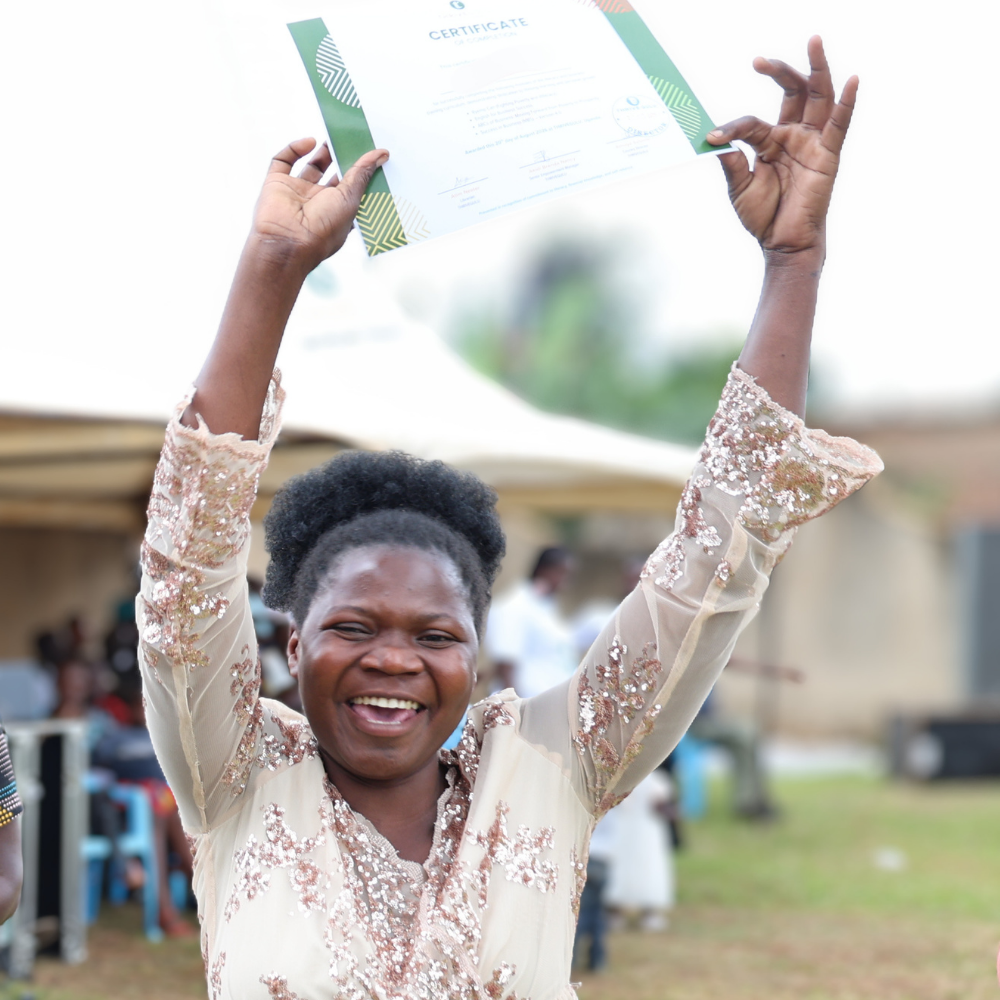
Before joining the computer literacy program at THRIVEGulu Women’s Library and Community Resource Centre, Judith had never touched a computer. Today, she is a first-year university student studying Procurement and Logistics at Gulu University.
With the computer skills she learned through the library and its free internet access, Judith researched universities and completed her own application—a process that would otherwise have required paying for time and data at an internet hub or café.
“I never thought I could learn computers this way,” Judith said. “This training didn’t just teach me typing—it opened the door to my future.”
Her story is one example of what takes place every day at the THRIVEGulu Women’s Library.
The Centre provides free access to books, study space, computers, internet services, literacy programs, children’s activities, and community learning opportunities. By the middle of this year, the library had welcomed more than 1,000 registered patrons—including more than 800 children.
For children, the library has become a place to read, play, learn, and imagine. Each Saturday, dozens of children stream onto the campus, ready for storytelling, reading activities, educational games, literacy exercises, and drama—and, of course, the chance to explore the books.
The library’s reach extends beyond its own walls, too. A Girls’ Book Club in six primary schools in Layibi reaches about 150 girls. Created to strengthen reading comprehension, confidence, and critical thinking, the program also responds to a basic challenge: there are not enough books available for all the children who want to read.
For adults, the library is also a place of second chances—or, for many, first chances.
Agness Angee left school after becoming pregnant and later began a small trading business to support her child. Before joining THRIVEGulu’s computer program, she kept track of sales largely from memory and scraps of paper.
Through the library, Agness learned to use Microsoft Excel to record her daily transactions and manage her business more accurately. She also had access to an old computer at home that had gone unused. A computer technician repaired it at no cost, giving Agness a way to keep practicing between lessons.
“I thought computers were not for someone like me,” Agness said. “Now I use one at home to keep my business records, and I know I am not stuck—I am still moving forward.”
Women also use the Centre for literacy, financial education, and savings-and-loan activities. Sixty-four women, ranging in age from fourteen to sixty-three, have participated in financial literacy, business success, and Village Savings and Loan Association activities. Together, they are building reading, writing, numeracy, financial management, and small-business skills. More than that, they are building futures alongside one another.
This is why support for the library matters so deeply. This month, that support took a tangible form through our book drive. Together, our community raised $1,310—enough to purchase at least 131 new books for readers in Uganda. In a library where children crowd in on Saturdays to read, where girls’ book clubs are growing in six primary schools, and where students like Judith depend on access to learning resources we provide, those books will be read, shared, carried into classrooms, and returned to again and again.
Each new book represents more than another title in the library. It is one more story a child can discover, one more chance for a child or adult to practice reading, one more resource for a girl building confidence, and one more invitation for a community member to keep learning.
The impact may begin with books, but it grows into something much larger: knowledge, confidence, connection, and possibility. In short, it helps survivors become THRIVERS.